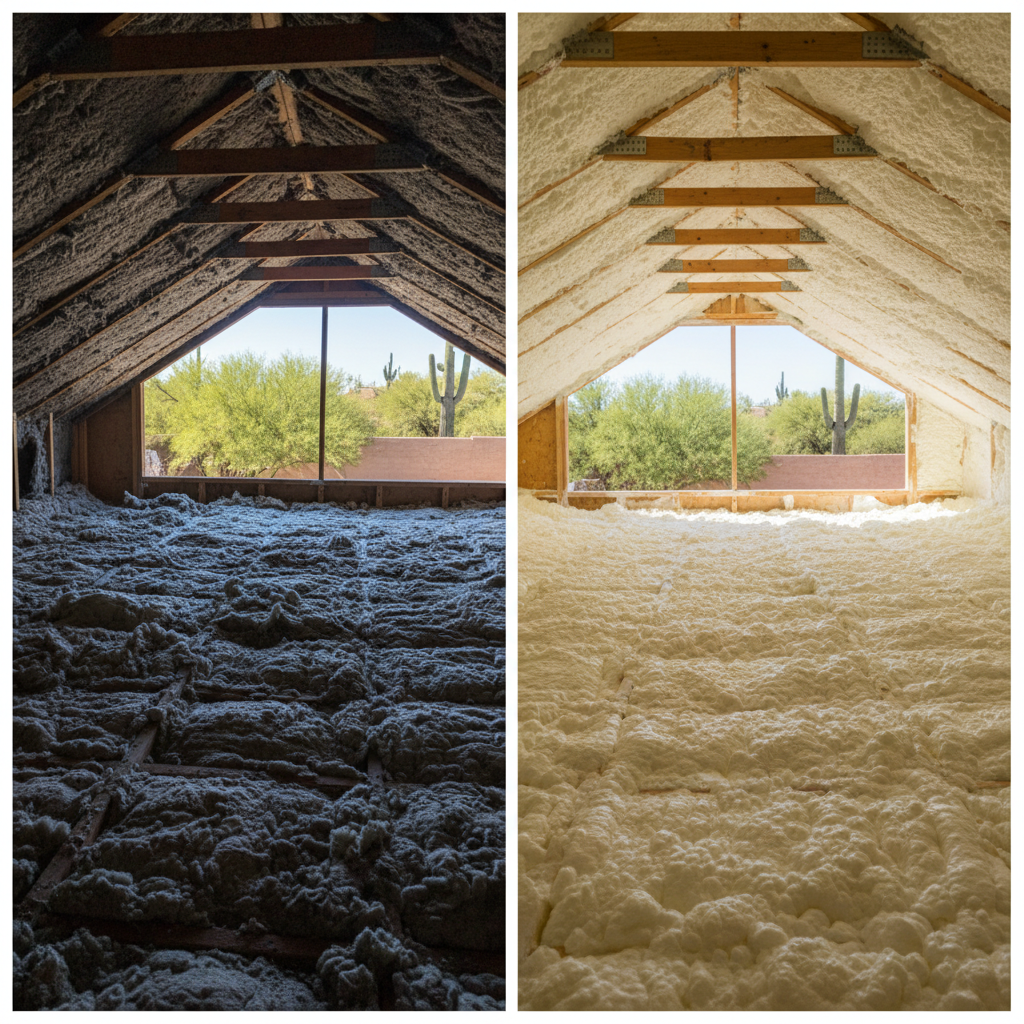
Alright, let's talk open-cell spray foam. If you're looking into it for your Tucson home, you've probably heard a couple of terms thrown around: 'flash and batts' and 'full fill.' These aren't just fancy names; they're two different ways to get that foam into your walls, and knowing the difference can save you a headache and some cash down the line. I've seen plenty of homes here in Tucson, from the old adobe places in the Barrio to the newer builds out by Dove Mountain, and how you insulate really makes a huge difference.
What's 'Flash and Batts'?
So, 'flash and batts' is exactly what it sounds like. We spray a thin layer of open-cell foam – maybe an inch or two – right onto the sheathing inside your wall cavity. Think of it as a super-tight air seal. That thin foam layer expands and seals up all those tiny cracks and gaps that traditional insulation just can't touch. After we do that, we come back and fill the rest of the cavity with traditional fiberglass or rock wool batts. It's a hybrid approach, really.
The Good and Bad of Flash and Batts
Cost: This is usually where flash and batts shines. You use less spray foam, which is the more expensive material per cubic foot. So, your upfront cost is generally lower than a full fill. It's a good way to get some of spray foam's benefits without blowing the budget.
Air Sealing: You still get fantastic air sealing. That thin foam layer does the heavy lifting here, stopping air leakage dead in its tracks. This is huge for comfort and energy bills, especially when our Tucson summers hit 110 degrees and you're trying to keep that cool air inside.
R-Value: The overall R-value often comes from combining the foam and the batt insulation. You can hit good R-values, but it might not be as high as a full fill spray foam application in the same depth cavity.
Moisture: Open-cell foam lets vapor pass through, meaning it's vapor permeable. This is generally a good thing in our dry climate, but if you have a significant moisture issue, you need to fix that first.
Installation: It's a two-step process, which means a bit more coordination for the installers. But for us at Tucson Spray Foam Solutions, it's a routine job.
What's 'Full Fill' Open-Cell?
Now, 'full fill' is the simpler concept. We just spray open-cell foam directly into the entire wall cavity until it's completely full. No batts, no other materials – just foam from one side to the other. It expands to fill every nook and cranny, creating a solid layer of insulation and air sealing.
The Good and Bad of Full Fill
Cost: This is typically the more expensive option upfront. You use more spray foam to fill the entire cavity, so the material cost goes up.
Air Sealing: It's exceptional. When you fill the entire cavity with foam, you get an airtight seal that's hard to beat. This means incredibly consistent temperatures and lower energy bills.
R-Value: You'll generally get a higher effective R-value per inch compared to flash and batts because the entire cavity is filled with the insulating foam. This means better thermal performance.
Sound Dampening: This is a big plus for full fill. Open-cell foam is fantastic at absorbing sound. If you live near a busy road or just want a quieter home, full fill makes a noticeable difference, doesn't it?
Durability & Maintenance: Once it's in, it's in. Open-cell foam doesn't settle or sag like some traditional insulations. It's stable for the life of your home, and you won't need to do any maintenance.
Appearance: Inside the wall, it looks like a clean, consistent fill. But you won't see it once the drywall is up, so appearance isn't really a factor for homeowners here.
My Recommendation for Tucson Homes
Alright, so which one should you go with? For most Tucson homeowners, if your budget allows, I'm going to lean towards full fill open-cell spray foam. Here's why:
Our climate is all about extreme heat. We don't deal with a lot of moisture issues in our walls, especially compared to places with high humidity or heavy rainfall. What we need is maximum thermal performance and airtightness to keep the heat out and the AC in. Full fill gives you that superior air seal and R-value throughout the entire cavity. That means better comfort, lower energy bills, and a quieter home, which is a huge bonus when you've got kids or just want some peace and quiet from the neighborhood sounds.
While flash and batts is a good compromise, and it definitely improves on traditional insulation, it's still a hybrid. You rely on the batts for a good portion of your R-value, and while they're fine, they don't offer the same continuous thermal barrier or sound dampening as a full foam fill. Plus, the durability of a full foam fill means you won't have to worry about settling or performance degradation over time.
Think of it this way: you're making an investment in your home's comfort and efficiency. If you can afford to go all the way with full fill, you'll reap the benefits for decades. It's a 'set it and forget it' solution that truly transforms your home's energy performance.
If you're still on the fence or want to talk specifics about your house, give us a call at Tucson Spray Foam Solutions. We're happy to walk you through your options and figure out what makes the most sense for your place.