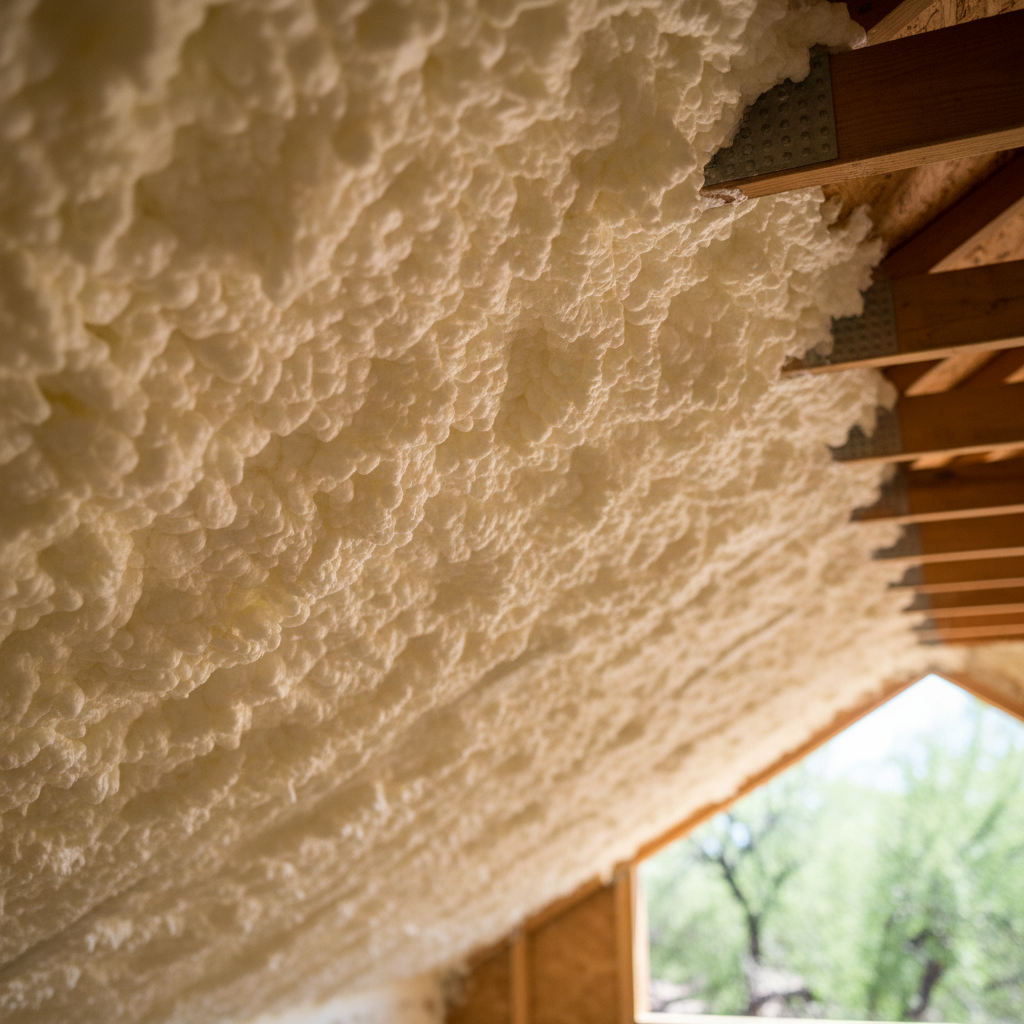
Thinking about open-cell spray foam for your home? Smart move. It's a fantastic insulation material, especially here in Tucson where we're always battling that heat. But before you dive in, you should really understand what you can tackle yourself and when it's time to call in a pro. Let's break it down.
What Open-Cell Spray Foam Is (and What It Isn't)
Okay, first things first: open-cell foam is kind of like a sponge. It's soft, flexible, and packed with tiny, open cells full of air. This makes it awesome for dampening sound, and it's a really effective air barrier. Plus, it's usually cheaper than its cousin, closed-cell foam. When it's applied, it expands a ton, filling every little crack and crevice – which is super important for stopping air leaks.
What it definitely isn't, though, is a vapor barrier. That's a key point to remember, especially if you're worried about moisture. For most attics or wall cavities in our dry Tucson climate, that's generally not a deal-breaker. Still, if you have specific concerns about humidity or leaks, it's something you should definitely chat about with your contractor.
Before You Even Think About Spraying
This is where your prep work comes in. Honestly, you can handle a lot of it yourself. It's all about getting the area truly ready so the foam can do its job without any hiccups.
- Clear the Area: Anything in the way has to go. Boxes, old insulation, debris – you name it. If it's in the attic, get it out. If it's in a wall cavity, make sure nothing's blocking the space.
- Protect Everything: Spray foam is sticky. And once it cures? It's a nightmare to remove. Cover floors, windows, anything you don't want foam on. Use plastic sheeting and painter's tape. Don't cut corners here; a little extra time with the plastic will save you hours of scraping later, trust me.
- Seal Up Big Holes: Yes, the foam fills gaps, but you don't want it pouring out of huge holes. If you've got massive openings to the outside or into living spaces, seal them up first with plywood or rigid foam board. Think about those big gaps around plumbing stacks or electrical conduits.
- Ventilation: This is absolutely crucial. Even if you're not doing the spraying yourself, the work area needs proper ventilation during and after application. The chemicals involved need to dissipate.
- Electrical Work: Any wiring that needs to be run, or junction boxes that need to be accessible, should be finished BEFORE the foam goes in. Once it's sprayed, you won't be getting to that wiring without a whole lot of fuss.
The DIY vs. Pro Decision: When to Call Tucson Spray Foam Solutions
Alright, here's the big question. Can you DIY open-cell spray foam? Technically, sure, you can buy small kits. But *should* you? For a whole house or even a large attic, my honest answer is almost always no. Here's why:
- The Equipment: Professional spray foam rigs are complex pieces of machinery. They heat the chemicals to precise temperatures and mix them at exact ratios. Get it wrong, and the foam won't cure properly, or it won't expand right. You'll just end up with a huge mess and wasted money.
- The Chemicals: These aren't harmless substances. They demand proper personal protective equipment (PPE) – respirators, full body suits, eye protection. Inhaling the fumes during application is absolutely no joke.
- The Technique: Applying spray foam evenly and effectively takes practice. You need to know how much to apply, how fast to move, and how to reach all those tight spots. Too little, and you won't get the R-value you need. Too much, and you're wasting material and possibly creating problems down the line.
- The Cure Time & Off-Gassing: There's a specific period where the foam cures and off-gasses. You need to know how long to ventilate the area before it's safe for people to be in there. Professionals know these timelines cold.
- Permits & Codes: Depending on the scope of the project, you might need permits. A professional contractor like us knows the local building codes and permitting requirements here in Tucson. We'll make sure the job meets all standards, including fire ratings if necessary.
For small, and I mean *really* small, touch-up jobs – maybe a tiny gap around a pipe – a DIY kit might work. But for insulating an entire attic, say, in a 1950s ranch house near the Catalina Foothills, where you've got uneven rafters and a million nooks and crannies? That's a job for the pros. We've got the gear, the training, and the experience to get it done right the first time, safely and efficiently.
During the Project (If You Hire Us)
If you've called in Tucson Spray Foam Solutions, your main job during the actual spraying is to simply stay out of the way. We'll handle the application, all the safety protocols, and the cleanup of our equipment. We'll make sure the area is properly sealed off and ventilated. You might need to leave the house for a day or two, depending on the size of the job and the ventilation, to allow for proper curing and off-gassing. Don't worry, we'll tell you exactly what to expect.
After the Foam is In
Once the foam is cured, it's pretty much hands-off. Open-cell foam doesn't degrade or settle like some other insulations, so you won't need to top it off. The biggest thing to remember is that it's an air barrier. If you ever need to run new wires or pipes through a foamed wall, it's going to be a bit of a chore. So, try to plan ahead for any future renovations.
Keep an eye out for any signs of water leaks. While open-cell foam doesn't soak up water like a kitchen sponge, it can hold moisture if there's a persistent leak, which isn't good for your home's structure. If you see water stains or feel dampness, get it checked out immediately. But honestly, with our dry climate, this is a lot less common than in, say, Florida.
Open-cell spray foam is a fantastic investment for comfort and energy savings in your Tucson home. Just make sure you know what you're getting into, and don't be afraid to call in the experts when the job truly calls for it. It's worth it to have it done right.