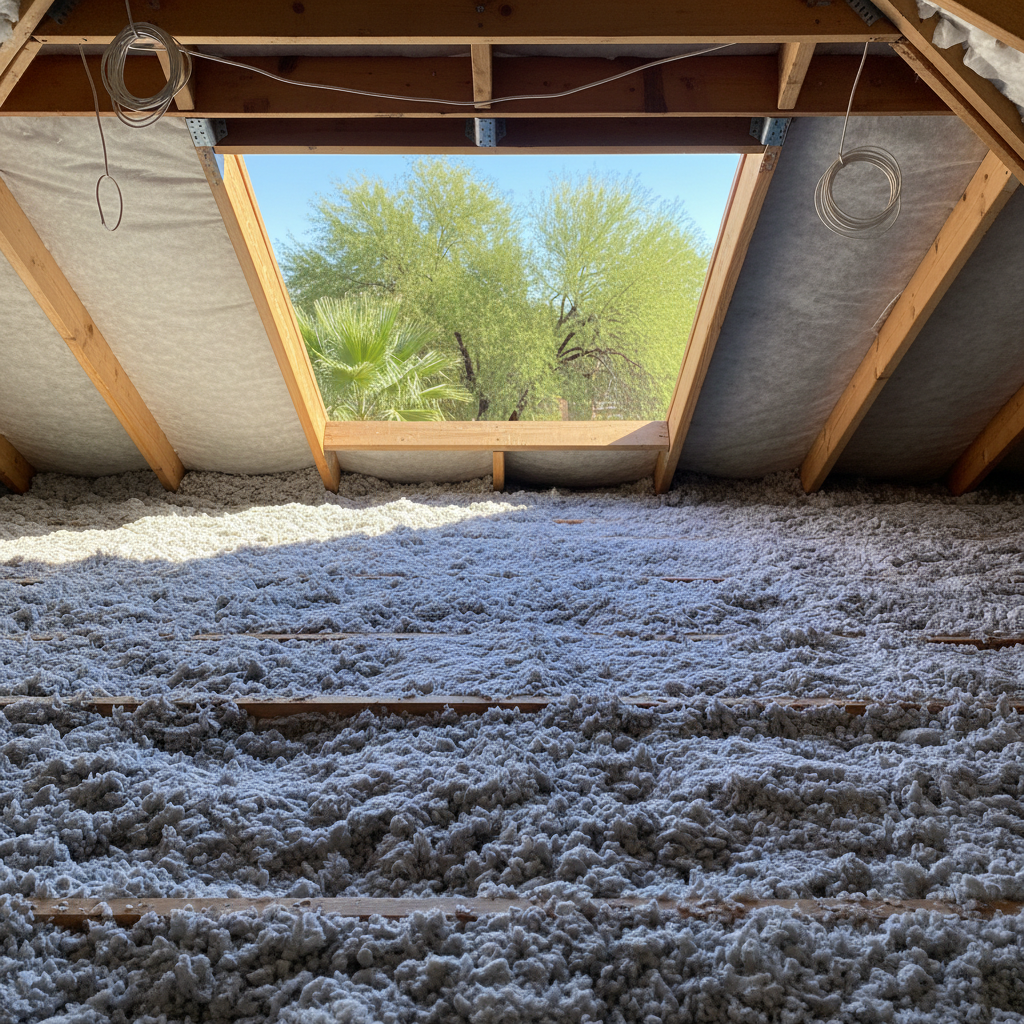
You've got questions about your attic insulation. I hear them all the time, especially here in Tucson where the sun really puts our homes to the test. Let's cut through the noise and get to the real answers you need.
What R-value do I actually need for my Tucson attic?
This is probably the most asked question, and for good reason. The R-value is how well your insulation resists heat flow. Higher R-value means better resistance. For Tucson, the Department of Energy recommends R-38 to R-60 for attics. Now, that's a pretty big range, right?
Here's my take: aim for the higher end if you can. We're talking about 110-degree summers here. An R-38 might be okay in some parts of the country, but in Tucson, especially if your AC is running non-stop and your power bills are through the roof, you'll feel the difference with R-49 or even R-60. It's an investment that pays off in comfort and lower energy bills. Don't just meet the minimum; exceed it if your budget allows. It's like putting a thicker cooler on your beer in July – you want that ice to last.
Is spray foam really better than traditional insulation like fiberglass or cellulose?
Okay, this is where I get to talk about what I know best. Yes, in many cases, spray foam insulation is a game-changer, especially for attics in our climate. Traditional insulation, like fiberglass batts or blown-in cellulose, works by trapping air. It does a decent job, but it's not air-tight. Heat can still move through air leaks.
Spray foam, particularly closed-cell spray foam, does two things at once: it insulates AND it air-seals. It expands to fill every crack and crevice, creating a continuous thermal barrier. That means less hot air getting in during summer and less cool air escaping. You won't just get a higher R-value per inch; you'll also stop those sneaky drafts. For a place like Tucson, where we're fighting extreme temperatures, that air-sealing quality is huge. It's why I started Tucson Spray Foam Solutions – I saw the difference it made.
My attic gets super hot. Will new insulation fix that?
Absolutely, it's one of the biggest things new insulation will tackle. Your attic acts like a giant oven in the summer. The sun beats down on your roof, heating the shingles, which then radiate that heat into your attic space. Without proper insulation, that heat just pours down into your living areas, making your AC work overtime.
Good insulation creates a barrier, slowing down that heat transfer. It won't make your attic cool like your living room, but it will significantly reduce the amount of heat that makes its way into your house. Think of it as putting a really thick lid on that oven. Your AC won't have to fight as hard, your home will be more comfortable, and you'll see those energy bills drop. It’s a direct solution to a hot house.
Do I need to remove old insulation before adding new?
Not always, but often it's a good idea. If your existing insulation is in good shape – dry, not matted down, no signs of pests or mold – you can sometimes just add new insulation on top to boost your R-value. This is often called