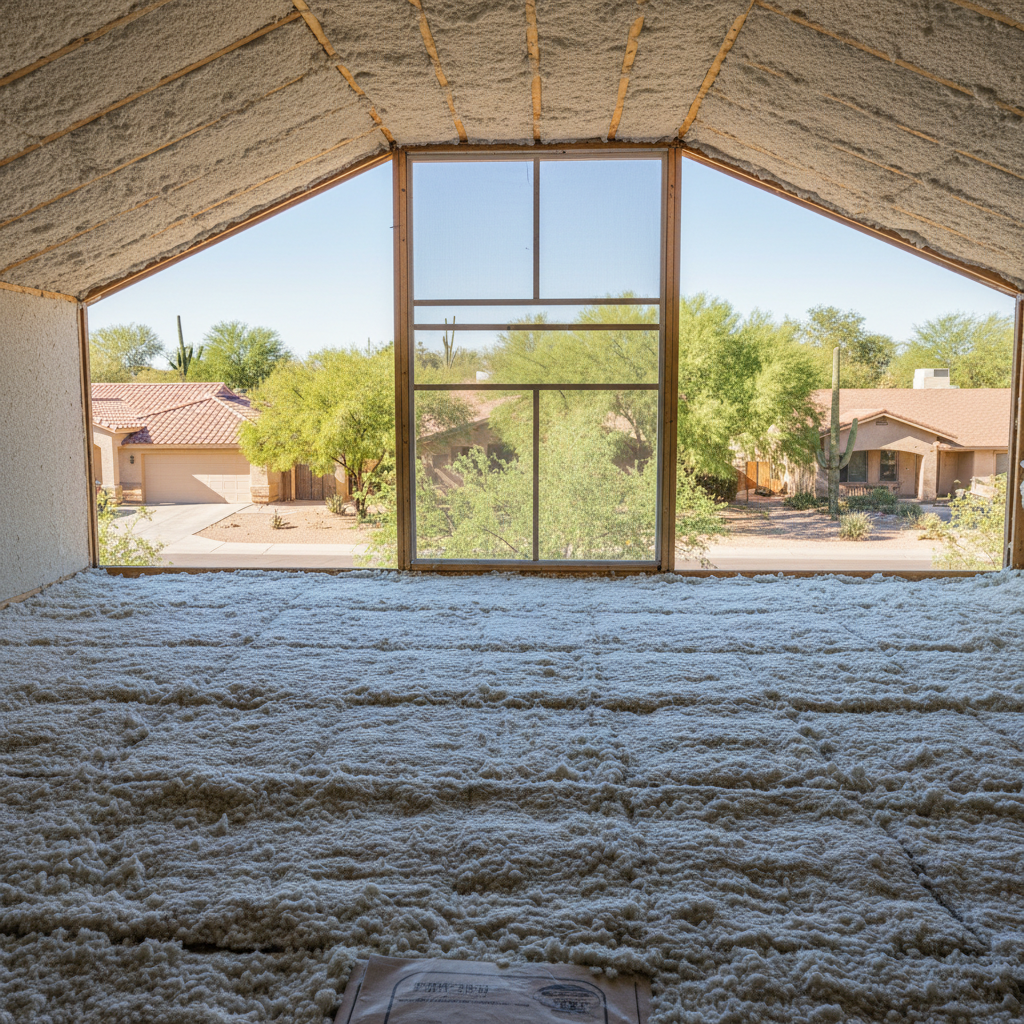
You know that feeling when your AC is running full tilt, but your house still feels like an oven? Or maybe it's 40 degrees outside, and you're bundled up indoors? A lot of folks immediately think their AC unit or furnace is dying. But often, the real problem is sitting right above your head: your attic insulation.
I've been in more Tucson attics than I can possibly count. I've seen everything from the older homes in Sam Hughes to the newer builds way out in Dove Mountain. And what I consistently find is insulation that's either insufficient, damaged, or just plain old. It's not always about having *no* insulation, you know? Sometimes it's about having the *wrong kind* or having it installed poorly.
Why Tucson Attics Are Different
Our desert climate isn't like anywhere else, is it? We get brutal summers with weeks of triple-digit heat. Even our winters can bring some surprisingly cold nights. This extreme temperature swing really stresses your home's thermal envelope, especially the attic. Just think about it: your roof can hit 150 degrees or more in July. That heat just radiates straight down into your living space if there's nothing there to stop it.
Then there's the dust. Tucson's dust isn't just annoying; it can settle right into certain types of insulation, making them less effective over time. Oh, and let's not forget the critters. Pack rats and other desert dwellers absolutely love making themselves at home in an attic. They often trample, nest in, and generally ruin insulation. I've seen entire sections of batt insulation pulled apart, or blown-in material flattened into useless clumps by these guys.
Common Attic Insulation Problems I See
Not Enough R-Value: This is probably the biggest issue. Many older homes, especially those built before the 90s, simply don't have enough insulation to meet modern energy codes. Forget handling our climate! You might have six inches of old fiberglass when you really need more like 15-20 inches of something dense.
Gaps and Voids: This is a huge energy killer. Whether it's poorly installed batts leaving gaps around joists, or blown-in insulation that's settled unevenly, any uninsulated spot becomes a direct pathway for heat to escape or enter. It's kind of like wearing a winter coat with big holes in it.
Compacted or Damaged Insulation: Fiberglass batts can get squashed, losing their loft and R-value. Blown-in cellulose or fiberglass can settle over time, especially if it gets wet or if someone's been crawling around up there. Once it's compacted, it's just not doing its job.
Moisture Issues: This is less common in our dry climate, sure, but roof leaks or even condensation from poorly vented bathrooms can saturate insulation. Wet insulation loses its R-value, and it can even lead to mold and mildew. I've actually seen this happen more often than you'd think, especially after a heavy monsoon storm.
Old, Dusty, and Contaminated: Sometimes, the insulation itself is just past its prime. Old fiberglass can become brittle and dusty. And if it's been contaminated by pests or their droppings, it's not just ineffective — it's a health hazard. You definitely don't want that stuff circulating in your home's air.
Why Local Expertise Matters for Your Attic
You can read all the general insulation guides online, but they won't tell you what it's *really* like to work in a Tucson attic. We know about the scorpions you might find up there. We know the specific challenges of insulating around swamp cooler ducts, or the unique construction of some of the older adobe homes downtown. We understand how our intense sun impacts different roofing materials, and how that affects the attic temperature.
When you're dealing with your home's comfort and energy bills, you want someone who's seen it all, right here in Tucson. We're not just throwing insulation up there; we're assessing your specific home, its age, its construction, and its current problems. We look at air sealing, ventilation, and the right type of insulation for your situation. For instance, we often recommend spray foam in certain areas, like rim joists or around penetrations. Why? Because it creates an airtight seal that other materials just can't match, especially with our dust and temperature swings.
At Tucson Spray Foam Solutions, we're not just selling a product; we're providing a solution tailored to our unique desert environment. We've helped countless homeowners across Tucson, from the Catalina Foothills to the south side, get their homes feeling comfortable again. Don't just suffer through another summer or winter. Get your attic checked out. It's often the smartest investment you can make for your home's comfort and your wallet.