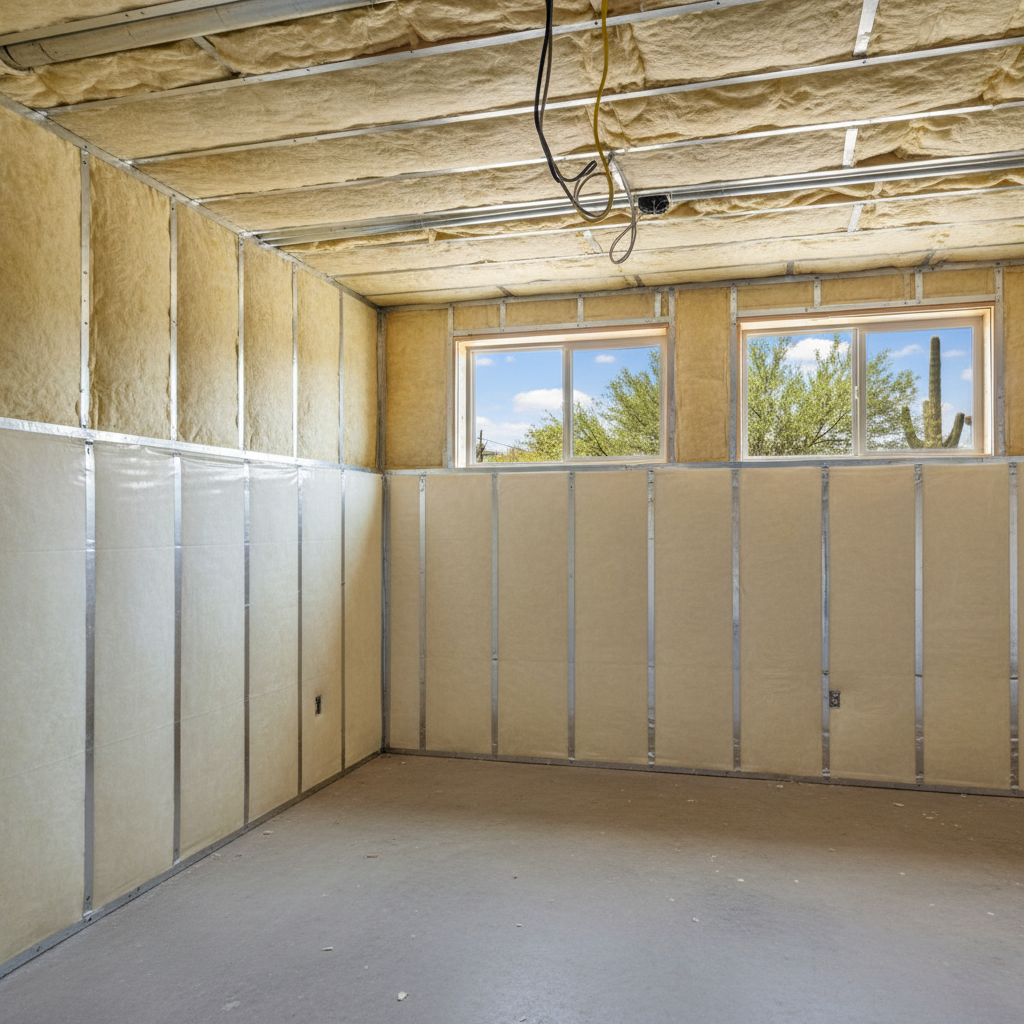
You'd think insulating a basement would be straightforward, right? Just slap some stuff on the walls, call it done. Well, in Tucson, especially with our unique soil and moisture challenges, it's actually a lot more complicated. I've seen some real head-scratchers over the years, and homeowners often end up spending more to fix mistakes than they would have on doing it right the first time. Let's talk about the common pitfalls, shall we?
Mistake #1: Ignoring Moisture Management First
This is probably the biggest one, and it's a real problem. Before you even think about insulation, you absolutely have to deal with any moisture issues. I'm talking about leaks, seepage, condensation – anything that makes your basement damp. Tucson's monsoons can be brutal, and even if your basement seems dry most of the year, a heavy rain can reveal hidden problems. If you insulate over a moisture problem, you're just trapping that moisture against your foundation. That's a recipe for mold, mildew, rot, and eventually, structural damage. I've seen basements in older neighborhoods, especially those built into hillsides with caliche soil, where water intrusion was a chronic issue. You've got to fix the source – exterior drainage, foundation cracks, grading around your house – before you even consider insulation. If a contractor doesn't bring this up, that's a huge red flag.
Mistake #2: Choosing the Wrong Type of Insulation for Our Climate
Not all insulation is created equal, especially for basements in a desert climate that still gets its share of humidity. You can't just throw up fiberglass batts and expect good results. Fiberglass can soak up moisture, losing its R-value and becoming a breeding ground for mold if it gets wet. Rigid foam boards, like XPS or EPS, are a better choice because they resist moisture and offer a continuous thermal barrier. But even better, in my opinion, is closed-cell spray foam. It creates an air and vapor barrier, which is crucial for basements. It sticks directly to the foundation walls, sealing up all those tiny cracks and gaps that let in air and moisture. It's a bit more money upfront, but the long-term benefits in comfort, energy savings, and moisture control are huge. Don't let someone talk you into the cheapest option if it's not the right one for a basement.
Mistake #3: Not Air Sealing Properly
Insulation and air sealing go hand-in-hand. You can have the best R-value insulation in the world, but if air is still leaking in and out, you're losing a ton of efficiency. Basements often have gaps where the foundation meets the sill plate, around pipes, wires, and vents. These are all pathways for unconditioned air and moisture to enter your home. A good insulation job, especially in a basement, includes thorough air sealing. When we do a job at Tucson Spray Foam Solutions, we're not just spraying foam; we're creating a sealed envelope. If a contractor just talks about R-value and doesn't mention air sealing, they're missing a critical piece of the puzzle. Ask them specifically about their air sealing process for basements.
Mistake #4: Forgetting About Local Building Codes
This isn't just about doing things 'right'; it's about doing things legally and safely. Tucson has specific building codes, and they apply to basement insulation projects too. For example, some insulation materials need a thermal barrier, like drywall, to meet fire safety codes. If you're using exposed foam insulation, you need to make sure it's covered or that the foam itself meets specific fire ratings. Ignoring codes can lead to failed inspections, fines, and potentially dangerous situations. A reputable contractor will know all about local codes and pull any necessary permits. If they brush off permits or codes, that's a massive red flag. You don't want to find out after the fact that your project isn't up to snuff.
Mistake #5: Focusing Only on Walls, Forgetting the Rim Joist
The rim joist is that band of wood framing around the perimeter of your basement, sitting right on top of your foundation walls. It's a huge source of air leakage and heat transfer, and it's often overlooked. Think about it: it's where your house meets the outside world, usually with just a thin piece of wood and some siding. Insulating and air sealing the rim joist area is just as important as insulating the main foundation walls. Closed-cell spray foam is fantastic for this area because it expands to fill all those irregular gaps and creates a perfect seal. If your contractor isn't talking about insulating the rim joist, they're leaving a major hole in your home's thermal envelope.
Insulating your basement in Tucson can make a huge difference in your home's comfort and energy bills. But you've got to approach it smartly. Do your homework, ask the right questions, and don't cut corners. It'll save you a lot of headaches – and money – down the road.