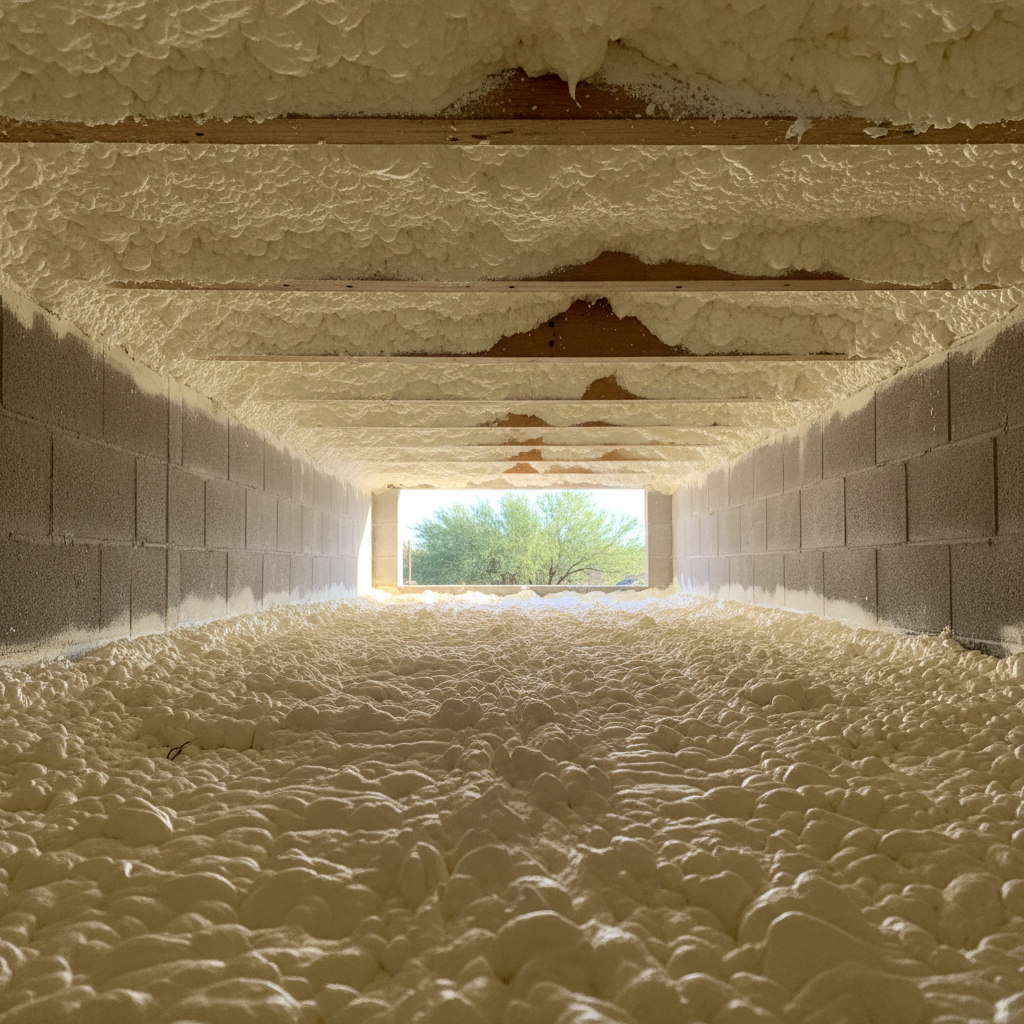
Alright, let's talk crawl spaces. If you've got one under your Tucson home, you know it can be a real pain. But ignoring it, especially when it comes to insulation, is a mistake that'll cost you comfort and cash. I've seen it time and again – folks wondering why their floors are cold or their AC bills are through the roof, and a good chunk of the time, it comes back to that neglected space under the house.
Before You Start: What to Check First
Before you even think about rolling out some insulation, you've got to deal with the basics. This isn't just me being picky; it's crucial. You can throw all the insulation you want down there, but if these issues aren't handled, you're just wasting your time and money.
- Moisture is the Enemy: This is number one. Tucson might be dry most of the year, but we get our monsoon season, and any leaks from plumbing, sprinklers, or even just poor drainage around your foundation can turn a crawl space into a swamp. You absolutely cannot insulate over dampness. You'll end up with mold, mildew, and insulation that's about as effective as a wet blanket. Check for standing water, damp soil, or water stains on foundation walls. Fix any leaks – plumbing, roof, or exterior drainage issues – first.
- Critter Control: Spiders, scorpions, rodents, snakes – they love dark, undisturbed places. Before you seal up your crawl space, make sure it's not a five-star hotel for local wildlife. Seal up any entry points, repair damaged vents, and make sure you're not trapping anything in there with your new insulation. You don't want to find a family of pack rats nesting in your brand new batts.
- Clean It Out: Get rid of any old, damaged insulation, debris, or anything else that doesn't belong. This is often the nastiest part of the job. Old insulation can be full of dust, allergens, and critter droppings. If it's falling apart, moldy, or smells bad, it needs to go. Sometimes, this alone is enough to make people call us at Tucson Spray Foam Solutions.
DIY vs. Calling a Pro: Knowing Your Limits
Okay, you've got a clean, dry, critter-free crawl space. Now what? This is where you decide if you're rolling up your sleeves or picking up the phone.
DIY Crawl Space Insulation: What You Can Tackle
If your crawl space is relatively easy to access – meaning you don't have to be a contortionist to get around – and you're dealing with fiberglass batts, you might be able to do some of this yourself. Here's what's usually involved:
- Measuring and Cutting: You'll need to measure the spaces between your floor joists and cut the batts to fit snugly. A utility knife and a straight edge work fine.
- Installing Batts: You'll push the insulation up between the joists, making sure the paper or foil facing (if it has one) is facing the conditioned space (upwards, towards your floor). You'll need insulation supports or wire hangers to keep it in place. Don't compress it too much; insulation works by trapping air, and squishing it reduces its effectiveness.
- Safety Gear: This is non-negotiable. Respirator, gloves, long sleeves, eye protection. You do not want fiberglass fibers in your lungs or on your skin.
This is usually for vented crawl spaces, where you're insulating the subfloor. It's doable if you're patient and don't mind getting dirty.
When to Call a Pro: It's Often Worth It
Here's when I tell folks it's time to bring in the experts. This isn't just about making a buck; it's about getting the job done right and safely.
- Encapsulation: If you're looking to fully encapsulate your crawl space – sealing it off from the outside air, laying down a vapor barrier, and insulating the walls rather than the subfloor – that's a professional job. This is a far more effective solution for moisture control and energy efficiency, especially in our desert climate where you want to keep that cool air in. It involves specific materials, sealing techniques, and sometimes even a dehumidifier.
- Spray Foam Insulation: This is our bread and butter at Tucson Spray Foam Solutions. Spray foam offers superior air sealing and insulation properties compared to batts. It gets into every nook and cranny, creating an airtight barrier. But it requires specialized equipment, training, and safety protocols. You can't just rent a machine and go for it; you'll make a huge mess and likely do more harm than good.
- Limited Access or Existing Problems: If your crawl space is super tight, full of old wiring or plumbing, or still has lingering moisture or pest issues you couldn't resolve, a pro has the tools and experience to navigate those challenges.
- Asbestos or Lead Paint Concerns: If your home is older, there's a chance you might encounter these. Leave that to certified professionals.
After the Insulation: What to Expect
Once the insulation is in, whether you did it or we did, you should notice a difference pretty quickly. Your floors will feel warmer in the winter and cooler in the summer. Your HVAC system won't have to work as hard, which means lower utility bills. You might even notice less dust and fewer pests making their way into your living space.
Keep an eye on things. Periodically check for any new signs of moisture or pest intrusion. Insulation isn't a set-it-and-forget-it solution if other problems pop up. But with a properly insulated crawl space, you'll have a more comfortable, energy-efficient home, and that's a win in my book.