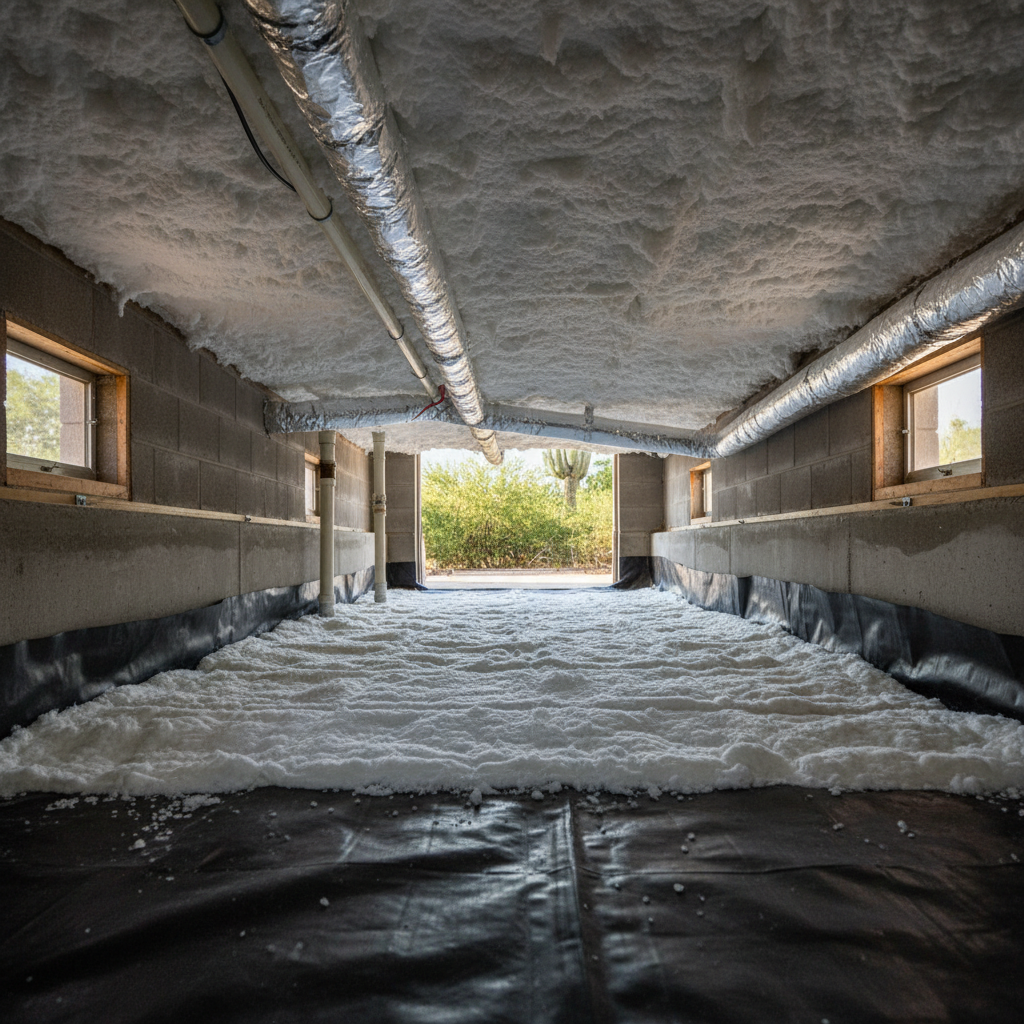
Your Crawl Space Insulation: A Little TLC Goes a Long Way
Let's be honest, you probably don't spend much time thinking about your crawl space. Most people don't. It's usually dark, dusty, and maybe a bit spooky down there. But what's hiding in that space – especially your insulation – actually plays a huge role in how comfortable your home feels and what you pay for energy. And just because it's out of sight doesn't mean it's out of mind, particularly here in sunny Tucson.
Believe me, I've seen it all in crawl spaces: from pristine to utter chaos. The good news is, with just a little bit of attention, you can make your crawl space insulation last a lot longer. We're talking about protecting that initial investment, which ultimately saves you money on expensive repairs or replacements later on.
How to Keep Your Crawl Space Insulation Working Hard for You
It's not rocket science, but you do need to do some regular checks. Here’s what I tell folks:
Keep it Dry: This is probably the most important thing, especially in our desert climate. Even though we don't get a ton of rain, when it does hit, it can really come down. So, make sure your gutters are clean and actually directing water away from your foundation. Check your sprinkler system, too – are the heads spraying right at the house? Foundation vents should be clear, but they shouldn't be letting water in. If you've got any plumbing running through the crawl space, keep a close eye out for leaks. Even a small drip can turn into a big problem over time, leading to mold or insulation breaking down. Seriously, it's a pain.
Pest Control is Key: Scorpions, spiders, rodents, even snakes – they all love a dark, quiet crawl space. Rodents, in particular, just adore nesting in insulation; they'll tear it up and leave droppings everywhere. Seal up any entry points you can find around the foundation. If you spot signs of critters, deal with them fast. You definitely don't want them making a home in your insulation.
Mind Your Vents: Many older Tucson homes have vented crawl spaces. The original idea was to let air circulate, but often, they just pull in hot, humid air in the summer and cold air in the winter. That makes your HVAC system work overtime. If your crawl space is encapsulated, those vents should be sealed up tight. If it's not, make sure they're not blocked by debris. But also, think about whether they're actually helping or hurting your home's efficiency.
Annual Visual Check: Once a year, or twice if you're really on top of things, grab a flashlight and take a peek. You don't need to be an expert. Just look for anything obvious: sagging insulation, water stains, animal droppings, or any strange smells. That's usually enough.
Warning Signs That Something's Not Right
Your house usually gives you clues when there's a problem, even if they're subtle. Don't brush these off:
Higher Energy Bills: If your heating or cooling costs suddenly jump without you changing your usage or the weather being extreme, bad crawl space insulation could be the reason. It means your conditioned air is escaping, or outside air is getting in too easily.
Unpleasant Odors: A musty smell in your living space, especially on the first floor, often points to moisture or mold growing in the crawl space. That's a major red flag you shouldn't ignore.
Sagging or Missing Insulation: If you do venture into the crawl space, look up. Is the insulation hanging down, torn, or missing in spots? That's a clear sign it's not doing its job anymore.
Pest Evidence: Droppings, nests, chewed wires, or even seeing pests in your living space can mean they've gotten into your crawl space and are damaging your insulation. Yuck.
Uneven Floor Temperatures: Are some parts of your floor noticeably colder or warmer than others? This can point to gaps or issues with the insulation directly beneath those areas.
Increased Allergies or Respiratory Issues: While not always directly linked, mold spores from a damp crawl space can circulate through your home's air, messing with your indoor air quality and making allergies worse.
When to Call a Professional (Like Us at Tucson Spray Foam Solutions)
Look, I'm all for DIY projects when they make sense. But some jobs are really best left to the pros. Here's when you should absolutely pick up the phone:
Major Water Intrusion: If you've had a burst pipe, a significant flood, or persistent standing water, you've got a bigger problem than just insulation. You need to fix the water issue first, and then we can assess the damage. Wet insulation is useless and almost always needs to be removed and replaced.
Extensive Mold Growth: A little bit of surface mold can sometimes be cleaned, but widespread mold growth requires professional remediation. It's a health risk, plain and simple, and needs to be handled safely and effectively.
Pest Infestation: If you've got a serious rodent or insect infestation that's damaged your insulation, you'll want a pest control expert to clear them out. After that, an insulation pro can clean up and replace the damaged material.
Significant Damage or Deterioration: If large sections of your insulation are falling down, compressed, or just looking really old and ineffective, it's time for an upgrade. Trying to patch it yourself often isn't worth the effort or the long-term energy savings you're missing out on.
You're Unsure: If you go down there and just have a bad feeling, or you can't quite figure out what's going on, don't guess. It's always better to get a professional opinion. We can do a thorough inspection, identify any issues, and give you clear options.
Your crawl space is a really important part of your home's overall structure. Keeping its insulation in good shape isn't just about comfort; it's about protecting your investment and keeping your home healthy. Don't let it become an afterthought.